

Accident is the driver of sometimes incredible events. A girl blogger came to our clinic for the first time to have her teeth professionally cleaned, and we agreed that she would share her impressions of the procedure in her blog. Nothing complicated – the procedure is quite ordinary.
But cleaning was not the end of it, when she came to us, the patient decided to consult us for more serious “dental” problems. She was concerned about the questionable aesthetics of the existing fillings and crowns and generally wanted to make her smile bright and expressive.
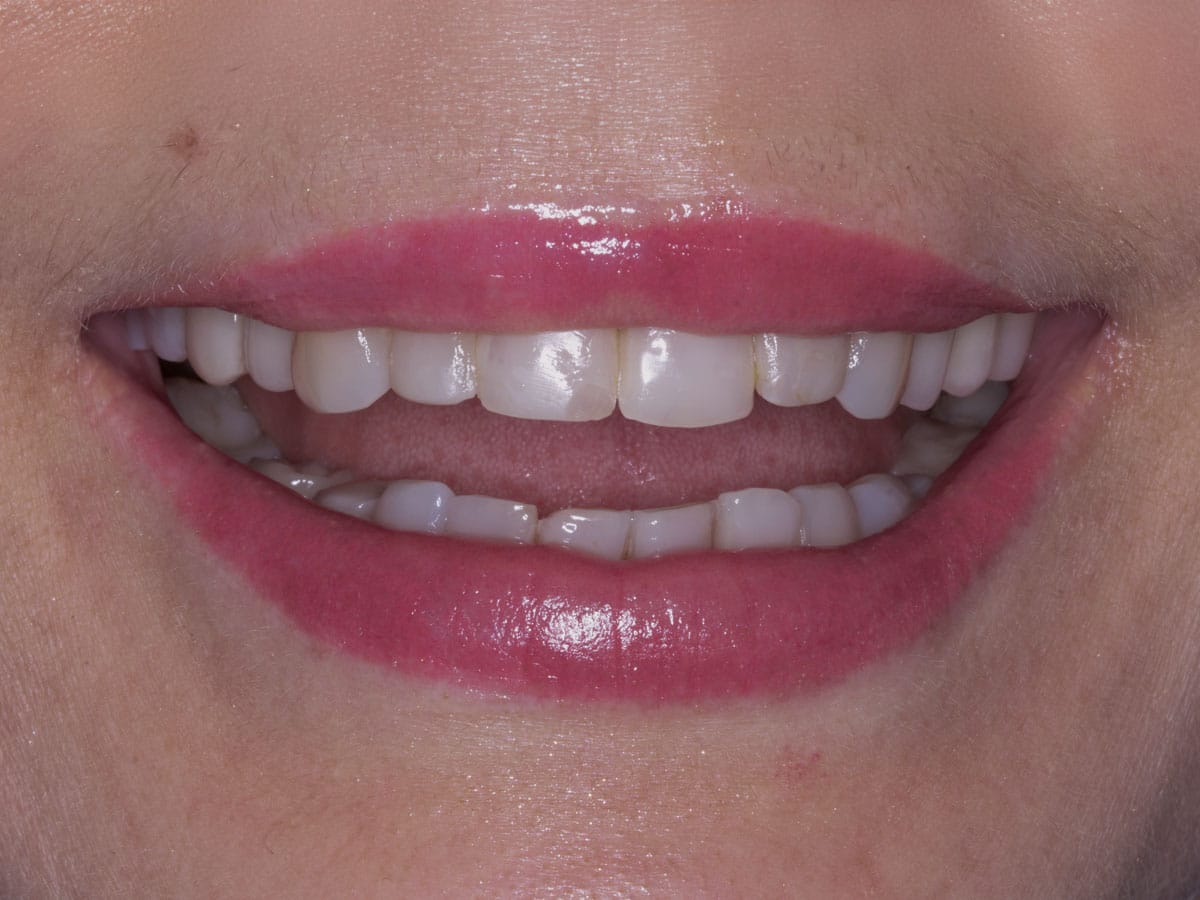
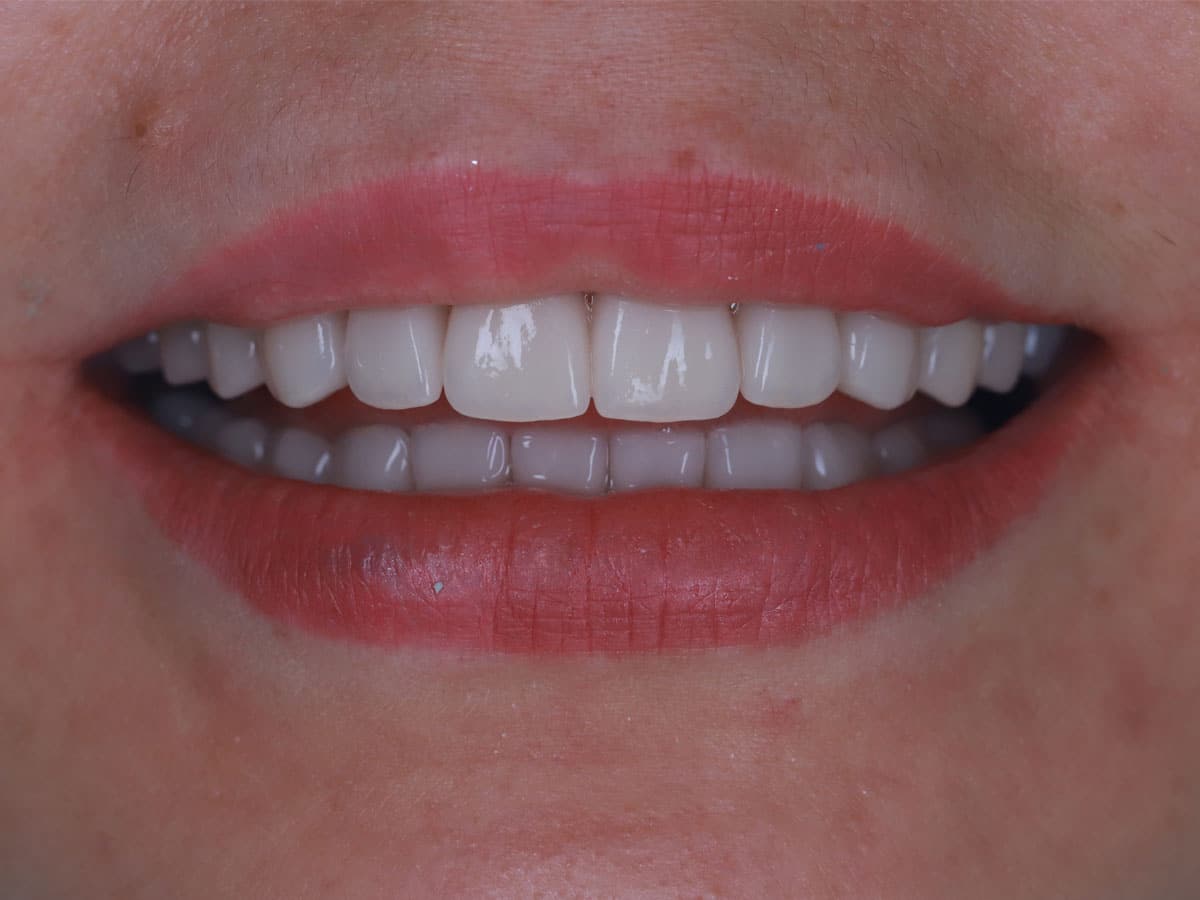
At the first consultation, we did a CT scan (computed tomography) and a photoprotocol of the smile (photo of the smile in different angles), discussed all the problems and wishes, talked to the patient in detail about her smile, found out what she likes and what she does not like and discussed in detail almost every tooth.
The diagnostic results showed that the problems were not only in the area of aesthetics – many teeth with previously removed nerves and filled root canals showed signs of bone destruction around the roots. The old metal-ceramic crowns also caused doubts. In order to preserve your natural teeth, treatment is necessary.
Having collected all the necessary information, we showed how the teeth would look like if restored correctly, demonstrated and detailed our similar cases, and presented a detailed treatment plan with the necessary manipulations, timing and approximate cost. The plan was agreed upon and now the long and difficult work was to be done
A treatment plan is a detailed and step-by-step plan of action designed to address all identified problems with a patient’s teeth and mouth. It includes a diagnosis, a list of necessary procedures, the steps to be followed, and the estimated time of treatment. The plan also includes an estimate of the cost of all manipulations and can be adjusted depending on the condition of the teeth and the patient’s reaction to the treatment.
At the preparatory stage, we were faced with a whole set of tasks: all the old crowns had to be removed and the teeth underneath them had to be revisited, the canals had to be repaired, and caries had to be treated. It was at this stage that an unpleasant moment awaited us – in the process of revision it became clear that one lateral tooth could not be saved, as it was too badly decayed, so it was a clear indication for extraction.
When this rather lengthy step was completed, we moved on to an item that was added to the treatment plan – placing an implant in place of the destroyed tooth
The fact that the tooth had to be extracted was, of course, a bad thing. But there were also positive aspects: the excellent condition of the bone and gum made it possible for a one-stage implantation.
The implant placement went exactly according to the plan and further according to the treatment protocol I had to wait 3-4 months for osseointegration (implant engraftment).
But the patient really wanted to become the owner of a beautiful smile as soon as possible, and we decided to meet her needs and to carry out the procedure of full restoration of the smile without wasting time, but we planned to load the implant itself (to install a crown on it) only after 4 months, that is, after full integration.
In some cases, one-stage implantation is possible, i.e. removal of a damaged tooth and placement of an implant in its place in one visit. For this to be possible, there must be sufficient bone volume and density at the implantation site, an appropriate implant model, stable condition of the surrounding tissues, and overall good health of the patient. But in any case, the decision on the applicability of such implantation in each specific case is made by the doctor.
It’s time to take impressions of your teeth for wax modeling. An accurate wax model of future dental restorations allows the dentist and patient to visualize the final result of treatment and make any necessary adjustments before fabricating permanent structures such as veneers, crowns, or bridges. Once the wax modeling is obtained, you can move on to the next step
The next step was to prepare the teeth for the veneers and crowns. To do this, a thin layer of enamel was removed to prepare a place for the veneers and crowns to be securely attached to a special adhesive.
Removing a small layer of enamel allows veneers to be placed without thickening the teeth, which provides a natural look; improves the adhesion of veneers to the surface of the teeth, ensuring their strong and durable attachment; allows you to correct the shape of the teeth, eliminating defects and creating ideal contours for future restorations.
Immediately after preparing the teeth, we fabricated and placed the temporary crowns. Now the patient can take a little rest from the procedures while waiting for the fabrication of the permanent structures
Finally, the permanent structures are ready, so it’s time for the fitting: before fixation, both we and the patient have to make sure that everything fits both aesthetically and functionally. It is at the fitting that the patient is able to see in the mirror how his or her new smile looks and, if necessary, to make the desired adjustments.
The patient clearly likes the result, the expression on her face shows this even before she has had a chance to say it out loud. There are no complaints about the initial mouth feel of the constructs.
Great, so this time, did without any corrections, which is very pleasant, and therefore – fix (fix the construction to the teeth on a special glue).
But this is not the final – you need to live with your new designs for a week, get used to them, listen to your feelings and get back to us again
Correct occlusion is the optimal contact between the teeth of the upper and lower jaw when they come together. It ensures an even distribution of chewing load, which prevents wear and damage to teeth and prosthetic structures, and reduces the risk of gum and joint diseases. This is why occlusion testing is extremely important.
The patient’s overall health and the longevity of the crowns and veneers we place depend on it. In this case, according to the patient’s feelings and the results of diagnostics, everything is normal and the result is excellent
Then, as always, the final stage is followed by hygienic cleaning, a check-up inspection and a photoprotocol.
We need it to document the result and the patient can compare the before and after photos. It is very interesting to directly compare the changes from different angles.
The patient is happy and we rejoice with her. To realize that your work brings happiness to people is priceless. It’s almost over, but there’s still one small detail to go
The time required for the integration of the implant has passed. Everything went perfectly, the implant has taken root, the gum has formed correctly, and we are now placing the zirconia crown as the final touch in this large and complex work.
That’s it! The total remodeling process is over. It has been 6 months since we were first contacted.
It remains only to remember about regular preventive visits – the key to healthy teeth and long service life of orthodontic constructions


The work was quite extensive and was fully completed in 6 months, taking into account the waiting time for osseointegration of the implant. Let’s go through all the stages of this total reconstruction
