

Almost all patients of dental clinics face such a problem as tooth decay. Painful sensations when food gets into the damaged tooth, reaction to heat and cold, unaesthetic appearance – this is not a complete list of problems that people may have when this disease develops.
According to numerous studies and the experience of leading experts, tooth decay is the most common problem in dentistry. Caries is caused by a number of factors:
- poor oral hygiene;
- frequent consumption of sugary foods;
- Consumption of mineral imbalanced water;
- metabolic disorders;
- other unfavorable factors that patients do not usually notice in their daily lives.
Most often, a person does not notice degenerative changes in the tooth enamel. This is due to the fact that at the stage of emergence, caries is a small white spot, which can only be seen by a dentist during a preventive examination. In dentistry, such damage is called a carious spot, and its appearance signals the need for the first clinical procedures.
If not addressed to a specialist in time, caries, in the process of development, can completely destroy a recently healthy tooth. Clinic doctors CitySmile is always ready to help diagnose and treat all stages of tooth decay in patients of all ages. We use only the most modern technologies and materials, and experienced and professional doctors will provide you with a radiant smile and a great mood. And remember, timely diagnosis of the condition of your teeth is no less important than quality treatment.
We invite you to have a preventive checkup with our leading specialists to give tooth decay no chance!
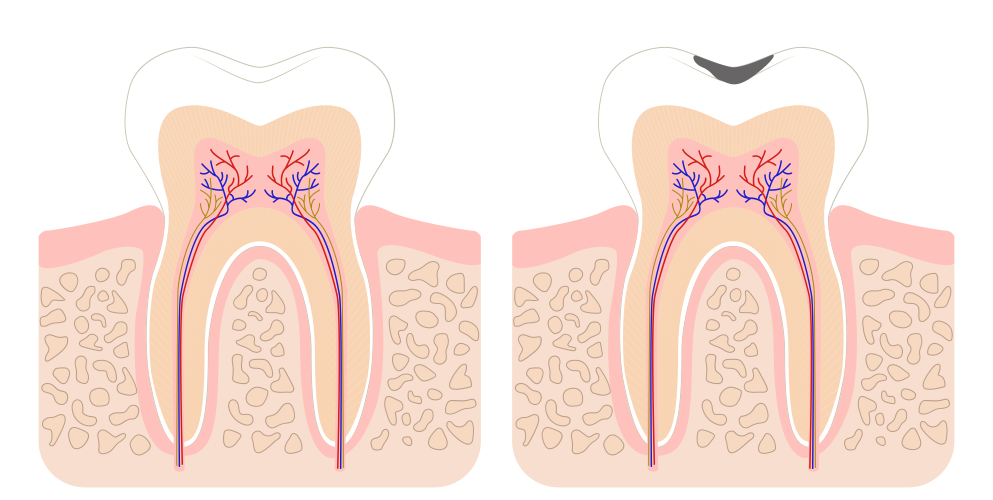
Demineralization or superficial caries
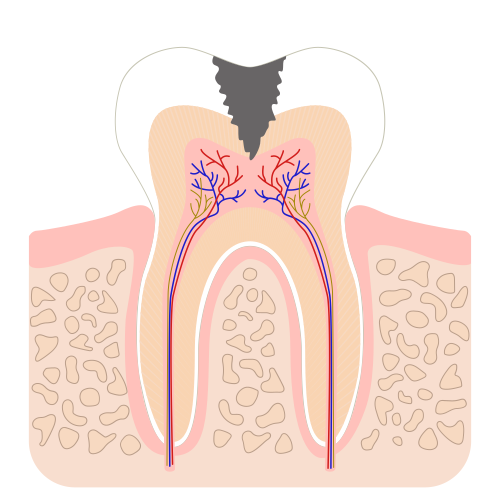
Dentin destruction
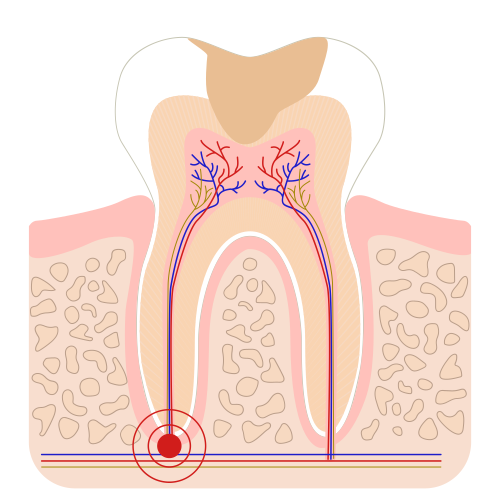
Pulp damage, pulpitis, tooth necrosis
The tooth is made up of several layers of different densities. The outer layer: enamel is the hardest and most resistant. However, plaque weakens and demineralizes the enamel. Because patients have no symptoms or pain, stage one tooth decay can only be detected during a professional examination by a dentist. The dentist will take steps for effective treatment. This is one of the reasons why it is necessary to visit dental clinic for preventive purposes. If the enamel is allowed to deteriorate further, small white spots turn brown, this is the transition to the second stage of caries, in which the enamel begins to deteriorate and cavities are formed, the dentin is damaged.
Dentin destructionDecay progresses to the middle layer: dentin, which is the second layer of the tooth. At this stage, decay begins to be painful, causing increased sensitivity to hot and cold. Because dentin is less hard than enamel, the decay expands, creating a cavity that is often larger than the lesion noticeable from the outside. At this stage, the decay needs to be cleaned out and fill teeth.
Pulp damage, pulpitis, tooth necrosisThe pulp is the layer underneath the dentin. It is the lowest part of the tooth and contains the blood vessels and nerves that support the tooth and provide sensitivity.
Once the decay has spread to the pulp, the tooth may begin to swell. The pressure will begin to increase as the tooth cannot expand with the pulp, causing severe pain. The final stage of pulp damage involves pulp die-off, also known as pulp necrosis.
When your pulp dies, you may experience the following symptoms:
- The color of the tooth changes from white to gray, then to black;
- foul odor;
- swelling around the tooth;
- a bad taste in your mouth.
To treat a damaged tooth pulp, you will need root canal treatment. During the procedure, the dentist will clean the damaged pulp, fill the resulting cavity, and place the tooth in place protective crown.
| Tooth Restoration (Caries Treatment) | from 1 900 UAH to 5 230 UAH |
| Artistic Restoration (Reconstruction of Front Teeth) | from 4 970 UAH to 7 290 UAH |
| Consultation with a specialist doctor | 850 UAH |
| Dental Check-Up | 1 750 UAH |
| Emergency dental care | 1 340 UAH |
| Anesthesia | 160 UAH |
| SedationMedical sleep sedation | from 4 600 UAH |

Dentist, therapist

Dentist, therapist

Orthopedic Dentist, Therapist

Patient, 36 years old, referred for aesthetic restoration
The purpose of caries treatment – preserve as much tooth tissue as possible and, if possible, keep the tooth alive. The order of treatment depends on the stage of decay.
When the pulp of a tooth is affected by decay, all of the pulp tissue is removed and the inner root canals of the tooth are cleaned and disinfected. This is called a pulpectomy (devitalization).
Do decayed baby teeth need to be treated?Treating decayed baby teeth helps protect permanent teeth. Baby teeth serve as a guide for the growth of permanent teeth. It is necessary to treat decayed baby teeth in order to:
- to avoid pain;
- to prevent the risk of spreading infection;
- Maintain a healthy oral environment for the development of permanent teeth.
It’s also important to keep your milk teeth, for:
- to maintain the child’s chewing strength;
- to avoid the development of speech impediments;
- Preventing bad habits (tics) with language;
- to save room for the permanent teeth.
Tooth decay is most often caused by sugars in food and bacteria in the mouth. It is a common disease that affects the vast majority of the population. However, it is possible to prevent tooth decay by taking certain measures:
- oral hygiene;
- consumption of fluoridated products;
- healthy eating;
- preventive dental visits.
The back teeth (molars or premolars) are cleaned of decayed plaque and inlays are placed on them. The front teeth (incisors and canines) are filled with resin or ceramic veneers, if necessary for aesthetics.
How quickly does tooth decay develop?
Tooth decay gradually progresses over several months. Initially, only the enamel of the tooth is affected without causing much pain. At this stage, it can only be detected by a dentist. If left untreated, it reaches the dentin and gives sensitivity to hot, cold and sharp pain.
