

What braces are forBraces are the most reliable, safe and time-tested method of bite correction. In this article, we have gathered all the necessary information about braces so that you can make an informed decision about braces and decide on the type of braces.
 1. aesthetics
Many people dream of a beautiful smile and perfectly straight teeth. But such a gift is not often given by nature – according to statistics, more than 90 people out of 100 have an incorrect bite. The most reliable, high-quality and safe means of correcting the bite and obtaining straight teeth are braces.
Yes, after undergoing orthodontic treatment with braces, your smile becomes perfect and you get rid of visual discomfort
2. Functional necessityIt is not as common as aesthetic, but nevertheless, a significant percentage of people have serious bite disorders, when the teeth grow too unevenly, or too tightly, which makes it difficult to chew food, worsens diction, leads to rapid destruction of teeth, bleeding gums. In these cases, orthodontic treatment is necessary. Modern bracket systems make it possible to correct these disorders in patients of any age. The only limitation is that treatment with braces cannot be performed on children under 12 years of age.
What brace systems are available 1. VestibularVestibular braces are the most common type of braces and are used in the vast majority of cases. Vestibular braces are fixed on the outer surface of the teeth. Yes, of course, they are visible during treatment, and this is probably the only disadvantage of these systems.
Metal braces
Metal vestibular braces are a classic, time-tested system. They are the ones that are pictured when thinking about braces. They are highly visible on the teeth and some people are embarrassed by the look of these metal brackets, although in many countries it is fashionable to wear such braces. Therefore, patients there insist on having these particular systems installed. There are two types of metal braces – ligature braces and ligatureless braces.
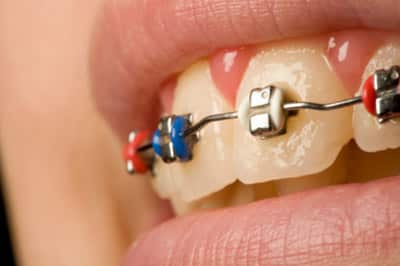 Ligature braces are cheaper and sometimes more aesthetically pleasing due to the fact that the ligatures can be in different colors, which is especially appealing to teenagers. Ligature braces require more frequent follow-up with the doctor to replace the ligatures, about once a month. Typically, ligature systems are used for minor bite correction.
In ligatureless (or self-adjusting) braces, the arch is fixed in the grooves, with special locks. This allows you to quickly install and remove the arch. You can be seen by a doctor much less often – once every 2-3 months. Ligature-free systems align teeth somewhat faster, due to self-adjustment. In some difficult cases, ligature-free braces are much more effective, and then our specialists recommend them. These braces are easier to care for – the brushing procedure is simpler. The cost of these systems is higher than ligature braces. Some people are a little confused by their appearance – they are completely metal and thicker due to the presence of locks. Although, as far as appearance is concerned, it is purely a matter of taste
Ceramic bracket systems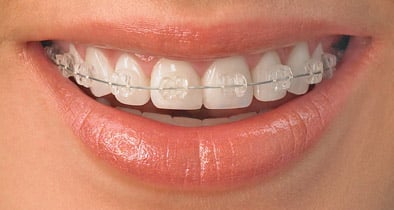 Ceramic braces have all the advantages of metal braces and in addition to this almost invisible, as their color is selected so that they visually blend in with the teeth.
With these braces, you can smile confidently in photos without fear of glare. Visual discomfort from wearing these braces is minimal. It is the best choice for an adult because it allows you not to be embarrassed by the metal “brackets” on your teeth.
Just like metal braces, ceramic braces come in ligature and ligature-free braces.
Ceramic braces are the optimal modern way to treat your bite.
Sapphire bracesSapphire braces are an analog of ceramic braces, but at the same time transparent and less noticeable, so now they are actively offered in some clinics. But this system has a number of critical disadvantages, which are often concealed: sapphire braces are prone to staining – and if at first they are absolutely transparent, by the end of treatment they acquire a permanent shade and are clearly visible on the teeth, they glare strongly in the light (especially noticeable in photographs), and, most importantly, sapphire braces are very fragile – the slightest blow and they can shatter into many small fragments. That is whyCity Smilespecialists do not recommend this bracket system.
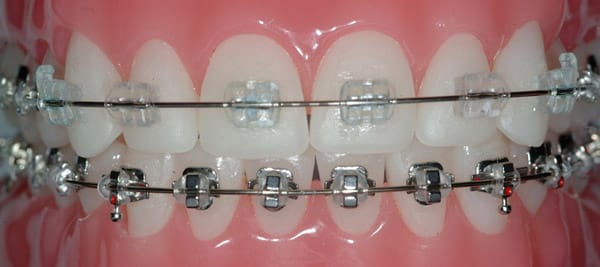
Combination bracket systemsBraces can be combined. For example, on the upper jaw you can have a low-visibility ceramic bracket and on the lower jaw you can have a metal bracket.
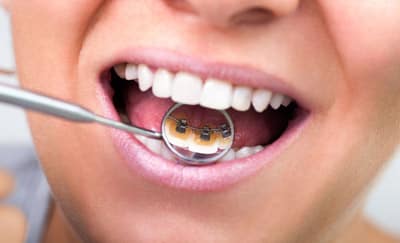
Their main difference and advantage is that they are fixed on the inner side of the teeth and therefore are absolutely invisible. The cost of such systems is quite high, they are often used by people for whom appearance is very important – public figures, TV presenters, actors. We recommend their use only if your work requires a special attitude to appearance. From the disadvantages it is worth noting possible at first problems with diction (until you get used to the system)
Choosing a brace system For a teenagerMetal braces are the best option. They are the most durable and reliable, and they are inexpensive. The choice of ligature or ligatureless systems depends on the degree of bite disorder (in some cases, only ligatureless can be used), your budget, availability of free time, for example, ligature braces require more frequent visits to the specialist and visual preferences (metal locks or ligatures). Ceramics may be recommended for an older teenager, as they are less visible and therefore will not attract undue attention.
Braces for an adultUsually, patients prefer ceramic braces because they are less noticeable. From a medical point of view, there is no difference between metal and ceramic. The choice is determined solely by aesthetic preferences and budget. In rare cases, when a patient wants to keep their treatment secret, lingual braces can be used.
How the treatment works- Initial consultation with an orthodontic specialist. The condition of the teeth and gums is examined. If necessary, the patient is referred for therapeutic treatment (caries is treated first, and only then braces are fitted).
- Selection of the bracket system, taking individual impressions, on which plaster models will be made and analyzed and the calculation of anchorage points will be carried out. Preventive cleaning of teeth.
- Fixation of the bracket system on the teeth and its activation
- Regular appointments. Regularity depends on the type of bracket system. These appointments last about 15-30 minutes. During this time, the doctor performs all necessary manipulations, answers the patient’s questions and gives recommendations.
- Removing the brace system.
- Consolidation of the obtained result. It is necessary to pay attention to this stage and pass it under the supervision of a doctor.
The price of bite correction depends on many factors. There can be no one-size-fits-all answer. Each case is different, and the technologies used differ in price. You can find the cost of treatment in the prices section .
But do not forget that bite correction is a whole complex of measures and additional procedures that may be necessary in the process of treatment.
LimitationsWearing a brace system does not impose any serious restrictions and does not reduce the quality of life. Of course, you cannot chew on breadcrumbs, carrots, hard apples. Taffy is strictly forbidden. For the duration of treatment you should be extremely responsible for oral hygiene – it is desirable to brush your teeth after every meal.
Treatment outcome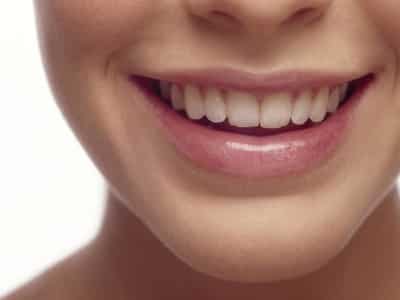
Treatment with braces will result in straight teeth and a perfect smile!
A beautiful smile is as much a necessity for a modern person as good clothes, self-confidence, culture and the ability to hold oneself in society.
A smile will never get old or out of fashion.
In the vast majority of cases, it doesn’t hurt. Yes, there is a little discomfort at first, but no more than that.
What can you eat with braces?Immediately dispel rumors – only soup and porridge do not need to eat. You can eat almost all foods, but use caution with solid foods and avoid foods that can get stuck in the braces’ design. Care is needed with hard meat, it is undesirable to consume nuts, can not – toffee, candy.
Can braces only help you when you’re a child?Braces are suitable for any age, starting at age 12. The younger the patient, the faster the treatment, but it is possible to correct the bite at any age.
How long do I need to wear braces?The duration of treatment depends on many factors, the main ones being the age of the patient and the severity of the bite disorder. On average, treatment takes from six months to several years.
Will my teeth be crooked again when the braces come off?No. With proper treatment, the result achieved will take hold. But after the system is removed, you will have to use a special mouth guard for some time, which is put on the teeth at night, or a retainer – a special wire fixed on the inside of the teeth.
When is the result visible after braces are fitted?The patient may notice the first results in 6-8 months, but treatment takes up to 2 years.
At what age is the best age to get braces?Specialists believe that the installation of a bracket system is optimal at 12-13 years of age, when the body is actively growing. At this age, orthodontic treatment has the maximum effect. It is not recommended to put braces until all permanent teeth appear.
Can I get braces at age 30? And at an older age?There is no age limit for braces. The main thing is that the patient must have a certain amount of bone tissue, no tooth mobility and, in principle, a sufficient number of teeth on which braces can be fixed.
