

Endodontics is one of the most important areas of modern dentistry, focusing on the treatment of the inner tissues of the tooth, particularly root canals. This specialty plays a critical role in preserving teeth that might otherwise be lost due to deep lesions or infection.
When is root canal treatment necessary?Root canal treatment is necessary when infection or inflammation penetrates the inner part of the tooth, known as the pulp. The pulp contains nerves and blood vessels and can be damaged due to deep decay, cracked tooth or trauma. Root canal treatment is necessary in these cases :
- Deep decay: Dec ay that has reached the pulp of the tooth can cause infection and inflammation.
- Pulpitis: Inflammation of the pulp, which is often accompanied by severe pain, sensitivity to hot and cold, and sometimes swelling.
- Cracked or fractured tooth: Cracks can allow bacteria to enter the pulp, causing infection.
- Tooth trauma: Shocks or injuries can damage the pulp, even if the tooth is not cracked or broken.
- Retreatment: If the previous canal treatment was ineffective or the tooth has become infected again.
In all of these cases, root canal treatment is critical to save the tooth and prevent tooth loss, as well as to eliminate pain and infection.
Importance of endodontics in dentistry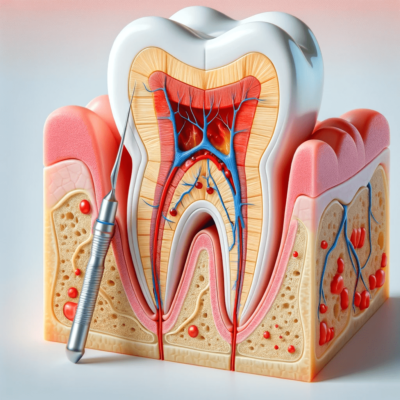 Endodontics is not just a procedure to remove diseased tissue; it is a process that preserves the natural tooth structure, preventing many of the problems associated with tooth loss, including bone atrophy and shifting of neighboring teeth.
Utilizing advanced techniques, such as microscopic canal treatment, greatly improves the accuracy and efficiency of the procedure, providing better outcomes for patients.
Root canal treatment under the microscopeEndodontics is a key area of dentistry that deals with treating the root canals of teeth, removing decay-damaged tissue and protecting the tooth from further damage. This is particularly important for preserving the tooth, even in complex cases, by avoiding tooth extraction.
Advantages of using a microscope in root canal treatment:- Increased precision: The microscope allows the doctor to see details in the root canal structure that are inaccessible to the naked eye.
- Effectiveness: By working with a microscope, the doctor can accurately identify and remove damaged tissue, minimizing the risk of re-treatment.
- Minimizing trauma: Precise treatment avoids unnecessary damage to healthy tooth tissue.
- Diagnosis: Treatment begins with a thorough diagnosis, including determining the extent of the root canal lesion.
- Access to the canal: With specialized instruments, the doctor gains access to the root canal.
- Removal of infected tissue: Under a microscope, the doctor precisely removes the damaged tissue, avoiding damage to healthy areas.
- Cleaning and shaping of the canal: The canal is thoroughly cleaned and shaped for filling.
- Filling the canal: The canal is filled with a specialized material that prevents re-infection.
- Tooth Restoration: After canal treatment, the tooth is restored to its natural form and function.
The use of a microscope in endodontics is a revolutionary approach that provides a significantly higher chance of successful treatment and tooth preservation, even in complex cases.
Comparison of microscopic treatment results with conventional methods:
- Increased precision: Canal treatment with a microscope allows for more precise detection and elimination of infection.
- Reduced risk of repeat treatments: The risk of retreatment is significantly reduced.
Long-term benefits for patients:
- Preservation of the natural tooth.
- Reducing the risk of complications.
- Reduced discomfort after the procedure.
Choosing modern treatments like microscopic root canal treatment can provide better results and dental health.
Root canal treatment is a dental procedure that involves removing diseased or inflamed tooth pulp and sealing the canal to prevent further infection.
How long does the root canal treatment procedure last?The length of treatment can vary depending on the complexity of the case, but it usually takes one of two visits to the dentist.
How do I care for my tooth after root canal treatment?It is important to practice good oral hygiene, avoid hard foods for a period of time after the procedure, and visit the dentist regularly for checkups.
What are the possible complications after canal treatment?Complications are rare but may include swelling, temporary discomfort or, in very rare cases, infection. You should seek immediate medical attention for any symptoms.
Any questions?Call and we’ll be happy to answer them!
