

Most people when asked, “what does a dental surgeon do?” will immediately answer that they extract teeth. This answer is, of course, correct, but it is far from complete. In fact, the work of a highly skilled dental surgeon is primarily aimed at preserving teeth.
Surgical treatments Tooth-preserving surgeriesDental surgery deals with bone augmentation (bone augmentation, sinus elevator), soft tissue plasty (gum augmentation, tongue frenulum plasty, etc.), dental implants, periodontal tissue surgeries, and tooth-preserving surgeries. And yes, of course, the services of a dental surgeon are necessary for tooth extraction.
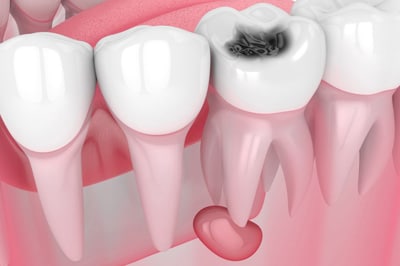 Tooth extraction is a last resort. Modern dental surgery is primarily aimed at preserving teeth. Tooth-preserving surgeries are very complicated and require extremely high qualifications from a specialist, but they can save the situation in many cases when a tooth seems doomed to be extracted.
- Tooth cyst removal. It is a relatively common problem when, as a result of trauma or infection, a granuloma forms in the area of the top of the root of the tooth. Until relatively recently, there was only one verdict in such a case – extraction. But modern surgery makes it possible to save such a tooth. A top-notch surgeon can remove the cysts and granulomas along with the top of the tooth root, while the tooth itself remains in place and continues to perform its functions unchanged.
- Tooth root amputation. Human canines and incisors have one root, premolars have one or two roots, and molars have three to four roots. In case of damage, for example, one of the three roots of the tooth, it is possible to perform an operation to remove the affected root, leaving the tooth itself intact and functional. This is a rather complicated operation, but the specialists of City Smile Dental Center will be able to solve this problem quite well
- Crown-radicular separations. An even more difficult, but accessible procedure for a skilled surgeon. If a double-rooted tooth has decay in the area where the roots separate, a good surgeon will be able to cut the crown of the tooth in two and separate the roots. As a result, the general dentist will be able to access the decayed area and treat it, saving the tooth.
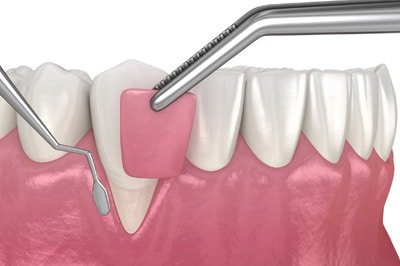 Periodontitis is a common gum disease, especially in older patients. There are proven methods of conservative treatment, but in complicated and neglected cases, conservative treatment is unfortunately no longer possible and only dental surgery can help
- Open curettage of gingival pockets. There is a small depression between the gum margin and the neck of the tooth – a periodontal pocket. Normally, its depth does not exceed 3 mm. In case of periodontitis, the pockets deepen considerably and become a place of bacteria accumulation. Since such pockets cannot be cleaned with a toothbrush, this leads to uncontrolled growth of hard deposits (tartar) that destroy the tissues that hold the tooth in the cavity. Curettage is the cleaning of periodontal pockets. If the pockets are no deeper than 5 mm, a closed curettage can be performed. But if the pockets are deeper, then surgical intervention is necessary – the gum must be cut for deeper cleaning. The operation is not very complicated, it is done under local anesthesia.
- Patchwork operations. Performed for moderate to advanced periodontitis. During this procedure, two vertical incisions are made in the gum, after which the flap is lifted and procedures are performed to remove granulation tissue and deposits.
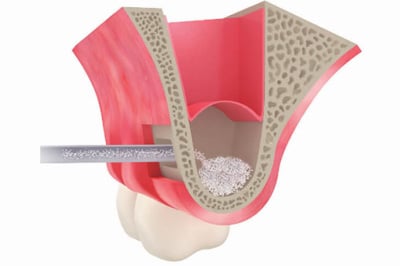 In order for an implant to take root and last for a long time, a certain amount of bone tissue is needed at the site of implantation. If the tooth to be implanted was lost a long time ago, the bone often atrophies. In this case, dental surgery can provide the necessary conditions for implantation
- Bone augmentation. This procedure is performed when there is not enough bone in the area where the dental implant is planned to be placed. The lack of bone tissue can be caused by injury, disease, bone resorption, or other factors. During bone augmentation, the surgeon adds donor bone tissue or synthetic materials to the area where bone augmentation is needed. This helps create enough bone tissue to accommodate the implant and ensure its stability.
- Sinus elevator. This procedure is used if the bottom of the sinuses (sinuses) is too close to the upper jaw, causing insufficient bone tissue to accommodate implants. A sinus elevator involves raising the bottom of the sinus and adding bone tissue to the space between the upper jaw and the bottom of the sinus.
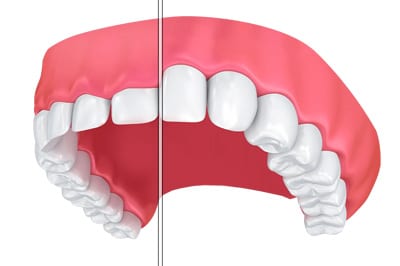 Surgical modification or restoration of soft tissue in the mouth area. Soft tissue grafting is used to improve the aesthetics of the smile, restore functionality, or prepare for further dental or orthodontic interventions.
- Gingivoplasty. Gum tissue plasty. This procedure is performed to correct the shape and size of the gum tissues. It can be performed to increase the height of the gums or to correct gum imperfections.
- Mucogingival surgery. Mucogingival plasty. Mucogingival surgery procedures involve modifying the soft tissues of the gums and mucosa to improve their health and functionality.
Plasty of the papillae of the tongue and lips. The most common indication for this procedure is ankylosis of the tongue (limitation of tongue mobility)
The most well-known and common procedure in dental surgery. This seemingly trivial manipulation also requires sufficient skill and a systematic approach to be performed correctly, safely and painlessly. First, the doctor must conduct a preliminary diagnosis, including radiography to determine the position and condition of the tooth, as well as assess the condition of the surrounding tissues, the location of nerves and vessels. The extraction procedure itself is usually performed under local anesthesia.
Difficult extraction cases may require splitting the tooth apart or an alveolotomy (removal of the bone around the tooth).
- Education and experience as a physician. Dental surgery almost always requires an extremely skilled practitioner. Even tooth extraction is an extremely complex procedure in some cases. Therefore, trust only experienced professionals. A dental surgeon should be familiar with modern methods and technologies in the field of dentistry and surgery, such as the use of lasers, computer navigation and three-dimensional modeling.
- Diagnostic facilities. Dental surgeries require quality diagnostics. Both at the level of specialists and equipment. In many cases, X-rays will not be enough, you may need a computerized tomography, 3d model of the oral cavity. Only with quality diagnostics it is possible to correctly assess the condition of teeth, bone tissue and other structures of the oral cavity.
- Treatment Planning. The dental surgeon must plan the surgical procedure based on the patient’s individual needs, possible complications, and desired results. The treatment plan also includes the selection of the optimal treatment technique.
Ethics and communication. Ethical standards and effective communication with patients, including explanation of procedures, risks and expectations, are important aspects of the practice of surgical dentistry. - Operational Techniques. In order for surgery to be as traumatic as possible and as effective as possible, the appropriate technology is needed. For example, a dental laser and microscope in modern dental surgery is not an excess, but a necessity.
- Safety and sterility. Adherence to the principles of asepsis and sterility is critical in dental surgery to prevent infections and complications from procedures.
- Postoperative care and adherence to doctor’s orders. The doctor will definitely give the necessary recommendations for the postoperative period, and possibly prescribe medication. Obviously, it is definitely not worth neglecting these recommendations.
Usually local anesthesia is used for this procedure, but it is possible to perform this procedure in a medicated sleep state if the patient wishes.
What risks are there in dental surgery?Potential risks may include bleeding, infection, swelling, soreness, pain, and reactions to anesthesia. However, these risks are minimized with proper diagnosis and following your doctor’s instructions after the procedure.
Why remove wisdom teeth?Wisdom teeth have no functional load, nor do they affect aesthetics in any way. They are essentially a vestigial organ. Therefore, if there are any problems with them or potential risks, the most effective method is to remove them.
Any questions?Call and we’ll be happy to answer them!
